

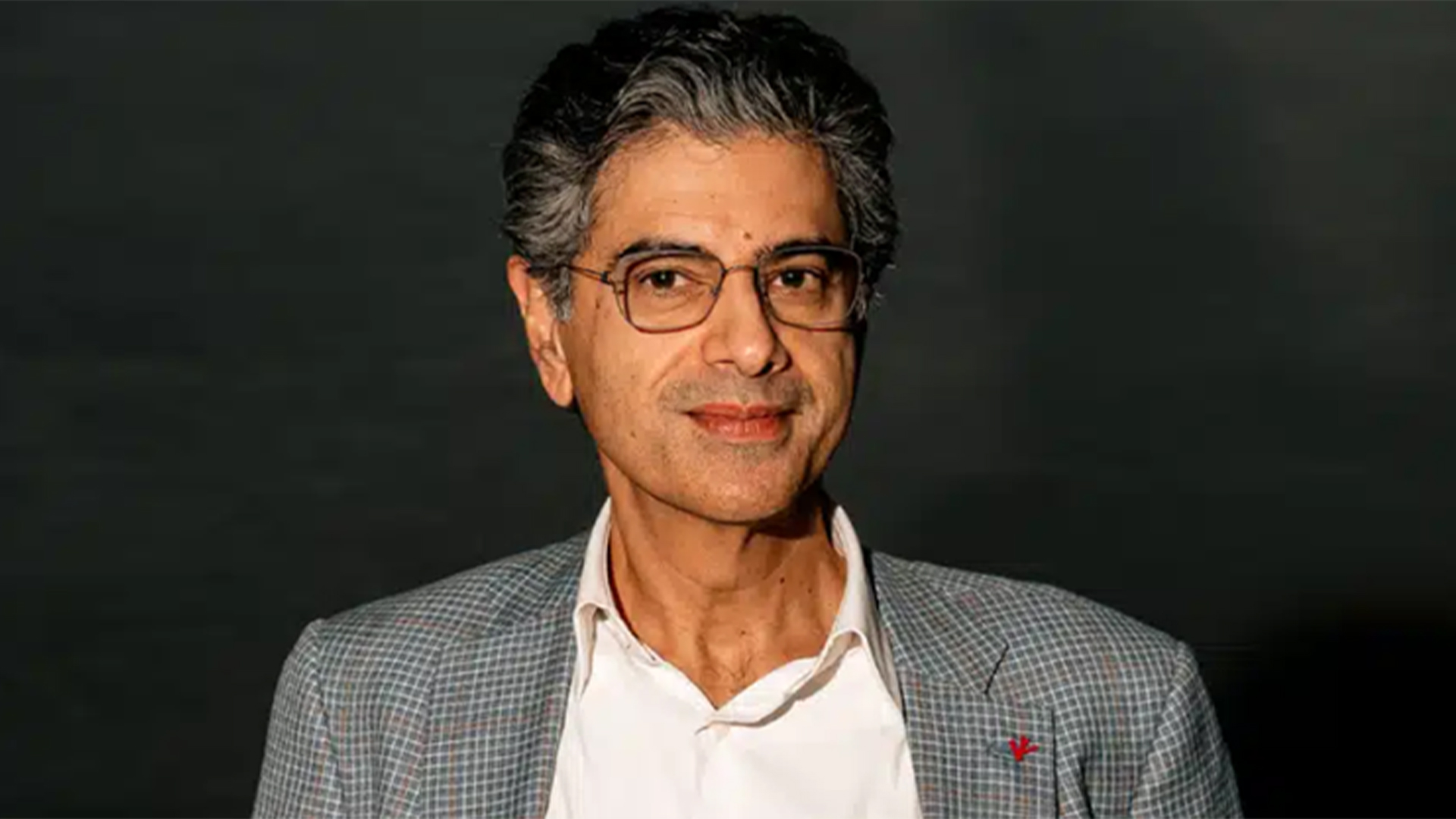
This exclusive interview with Alok Sama was conducted by Tabish Ali of the Champions Speakers Agency.
Alok Sama is a distinguished Finance & Banking speaker and seasoned investor whose insights bridge global finance, technology and entrepreneurial strategy. With deep experience across capital markets, investment management and strategic board advisory roles, he has worked with leading institutions and founders to identify transformative opportunities and understand risk in an increasingly complex economic landscape.
Alok combines his practical experience in technology investing with a thoughtful understanding of markets, addressing how capital allocation, founder resilience and product-market dynamics shape long-term value creation. His perspective on scaling businesses and evaluating investment opportunities reflects a blend of analytical rigour and real-world leadership.
In this exclusive interview with the London Keynote Speakers Agency, Alok Sama shares his views on innovation, investment decision-making and the leadership qualities that drive success in finance, technology and beyond.
Question 1: Large technology firms are often criticised for stifling innovation. From your perspective, does scale genuinely hinder innovation and productivity, or can size be a strategic advantage?
Alok Sama: For, yeah, I think the issue of size comes up in the context of the US Magnificent Seven, certainly Google, Microsoft and others. I, for one, am not convinced that size is the enemy of innovation.
If you go back and look at the history of technology innovation, back in the 60s and 70s the centre of innovation was less Silicon Valley and more Bell Labs. Bell Labs was a part of AT&T, which was the ultimate monopolist in terms of monopoly on the telecommunications business in the United States.
Even if you take Google, for example, the innovation at Google unrelated to its core business. DeepMind is a great example. You saw the Nobel Prize go to a couple of people from Google as a result of the work they’ve done on protein folding. That has been quite an amazing, transformative way.
Again, out of Google, autonomous cars, that technology has nothing to do with Google’s core business, but that’s something they invested in, suffered huge losses over a period of time, and now it’s very real. I wrote in my first Wao a few weeks ago and there’s no looking back. You just know that’s what the future is.
Some of these companies, founder-controlled companies, have been enormously successful cash generators. They have the ability to invest in unrelated businesses that can be quite profound in terms of the impact they make on technology and on humanity, generally speaking.
Having said that, there is scope for abuse. Amazon, for example, in terms of the power that it has and how it exercises it in the context of its marketplace, those are things that regulators need to watch out for.
I, for one, am a big fan of behavioural remedies as opposed to structural remedies. In other words, dictate how people behave in the conduct of their business as opposed to outright break-ups. I’m just not convinced that would accomplish anything, in the case of Google, for example, which is a case that’s going to be litigated over the next several years.
Question 2: When investing in or acquiring a business, what core factors determine whether a company has the potential to deliver outsized, long-term returns?
Alok Sama: Technology investing, at some level, is a numbers game. You have to take a portfolio approach. If you make ten investments, you know that a couple are going to be outright dogs, complete write-offs. Some are going to be middling performers, and you invest in the hope that at least one is going to be a home run.
If you take that approach, then when you look at an investment, you have to start off by looking at the addressable market and whether this business can be huge, and make up for the dregs that you’re inevitably going to have in your portfolio. Not just a ten-bagger, but potentially a hundred-bagger.
For that, you look for businesses that have the potential to become huge businesses, to become unicorns, decacorns and beyond. That’s one.
Then you look for product-market fit. It’s one thing for the market to be large, but you’ve equally got to have a product that fits with the needs of that marketplace. Product-market fit is crucial.
Third, but by no means least, is the entrepreneur. You need to look for entrepreneurial resilience. Has this individual, he or she, dealt with failure? It’s a bit cliché, but it’s a stepping stone to success.
You look for resilience. You look for flexibility. Whether this individual will listen to investors, whether the founder will be flexible. There are lots of twists and turns inevitable along the way, and they need to listen to the board and take guidance.
Those are some of the characteristics that you look for in a founder. So those three factors, large addressable markets, product-market fit, and then very importantly, very crucially, the founder, those are the things I would look for.
Question 3: When you speak to senior leaders and investors, what lessons or perspectives do you most want them to take away from your experiences in technology and investment?
Alok Sama: I tend to think of speeches or lectures as a little bit patronising. My approach, which is the case with my book too, is to share my experiences, to share anecdotes, and equally invite an audience to share their experiences.
In the process of sharing our respective stories, hopefully we all learn from each other. I’m a big fan of engagement, of interactive sessions, as opposed to lecturing.
I do hope that in the course of these interactions people learn something about the investment business, the technology investment business in particular, with Masaan, the idealism with which he approaches the investment business, which is something I find very attractive.
At some level, the investing business has become fairly crass and commercial, so diving into that aspect of it, the linkages, philosophical themes like the linkages between money and happiness, stages of life, those are the types of things I love to explore in sessions with groups.