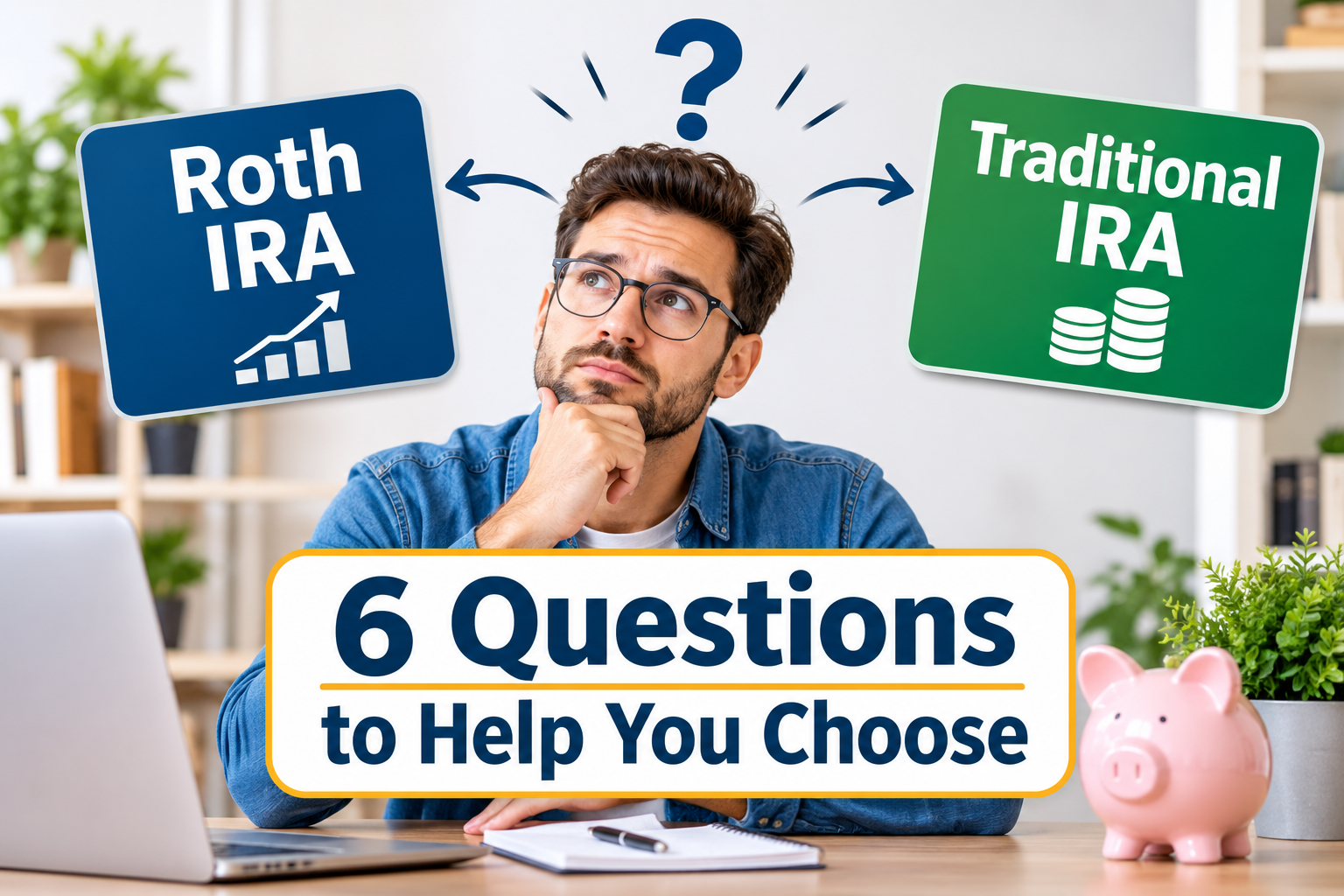


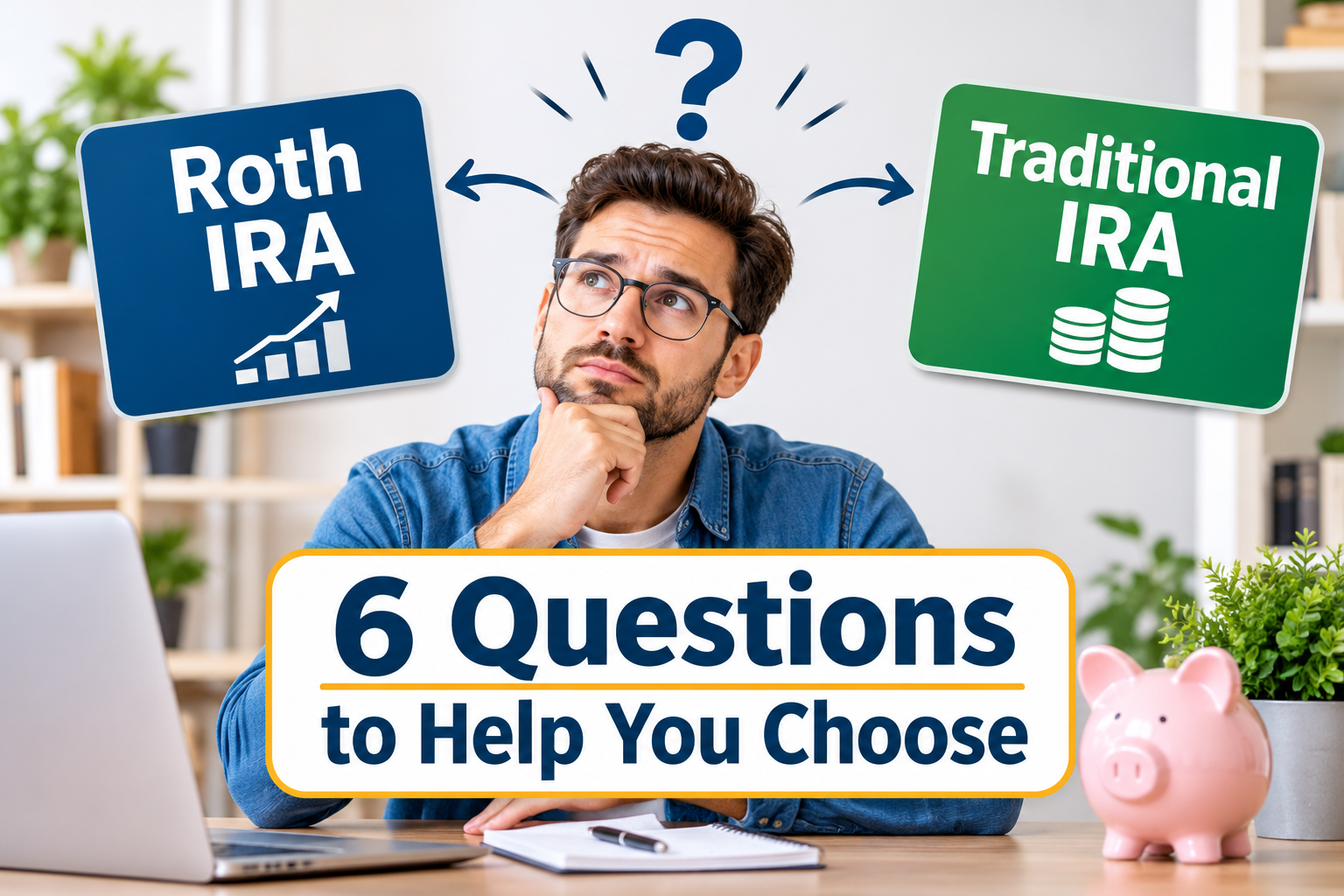
Choosing between a Roth and a traditional IRA is one of the most common retirement planning decisions, and it comes down to a single trade: pay taxes now or pay taxes later. Both accounts offer tax advantages, but they work in opposite ways, and the better choice depends on your income, your expectations and your goals.
Many savers ask whether a roth ira or traditional account makes more sense, and SoFi has a comparison on its site. The six questions below can help you structure your thinking, whichever provider you choose. This is general information, and a tax professional can apply it to your situation.
You do not have to make a perfect prediction. You only need to make a reasonable one and keep contributing. Tax law, income and family circumstances all change, so the right choice at thirty may differ from the right choice at fifty.
If you are still undecided after reading, remember that you can often split contributions between both types over the years, as long as the combined total stays within the annual limit. A modest contribution to either account beats waiting for certainty.
1. Do I Expect a Higher or Lower Tax Rate in Retirement?
If you expect to be in a higher bracket later, paying taxes now through a Roth may be attractive. If you expect a lower bracket, a traditional deduction today may be more valuable. No one can predict tax law, so many people diversify.
2. Am I Eligible for a Deduction or a Roth Contribution?
Income limits can restrict Roth contributions and traditional deductions, especially if you have a workplace plan. The IRS spells out the rules on its page about IRA contribution limits. Readers who want background can check SoFi’s overview of roth ira or traditional.
3. How Important Is Flexibility?
Roth contributions can generally be withdrawn without tax or penalty, which gives a measure of flexibility. Traditional accounts have stricter rules on early withdrawals. Consider whether you may need access to funds before retirement.
4. Do Required Distributions Matter to Me?
Traditional IRAs require withdrawals starting at a certain age, while Roth IRAs do not require them for the original owner. If you want to leave money to heirs or control your taxable income in retirement, that difference matters.
5. How Much Am I Saving Overall?
If you already have a workplace plan, think about how an IRA fits. A mix of pre-tax and Roth savings can provide tax diversification. Capturing an employer match comes first.
6. Which Option Will I Actually Use?
The best account is the one you fund consistently. If a Roth feels simpler or more motivating, that may outweigh small tax differences. If an upfront deduction helps you save more, the traditional account may win.
Making the Decision
Your choice comes down to your expected tax rate, your eligibility, how much flexibility you need, whether required distributions matter, how an IRA fits your other savings and which account you will actually fund. Write down your answers, estimate your current and future tax situation and decide on a split if you cannot choose. Revisit the choice each year, since income and rules change. Whatever you pick, automate contributions, choose low-cost diversified investments and avoid early withdrawals. Keep your beneficiary designations current, since they override a will. The difference between the two accounts matters less than the habit of saving steadily over many years. Many people find that the decision becomes easier once they actually start, because they learn how the account works and how much they can afford to set aside. If your employer offers both Roth and pre-tax options in a workplace plan, the same questions apply there, and splitting contributions can be a sensible way to hedge against uncertainty about future tax rates.
Special Situations Worth Knowing
If you earn too much to contribute to a Roth directly, ask a tax professional about conversion strategies. If you are self-employed, other retirement accounts may allow larger contributions. If you expect your income to drop, such as during graduate school or a career break, a Roth contribution may be especially attractive because your current tax rate is low. Conversely, a high earner near a peak bracket may value a deduction. Look at your whole financial picture instead of making the choice in isolation, and revisit it when your life changes. The SEC’s page on exchange-traded funds explains a common way to fill either account.
Frequently Asked Questions
How do I open an IRA?
To open an IRA, choose a provider such as a brokerage, bank or robo-advisor, then complete an online application with your identity, address and employment information. Select the account type, name beneficiaries and link a bank account for funding. After the account is open, make a contribution and choose investments, because money may sit in cash until you invest it. Make sure contributions stay within annual limits.
Can I contribute to both types in the same year?
Yes, as long as your total contributions do not exceed the annual limit.
Can I convert a traditional IRA to a Roth?
Yes, but a conversion can create taxable income, so plan carefully.
Can I change my mind later?
Yes. You can contribute to a different type next year or convert in some cases, though conversions have tax consequences.
Which is better for beginners?
A Roth often appeals to beginners because of its flexibility and simplicity , but the right answer depends on your tax situation.