

When an insurer sets a renewal price, it estimates what claims will cost in the coming year. Higher repair and replacement bills can affect a Toronto driver’s premium even after an accident-free year. A clean record still counts, but it doesn’t freeze the price.
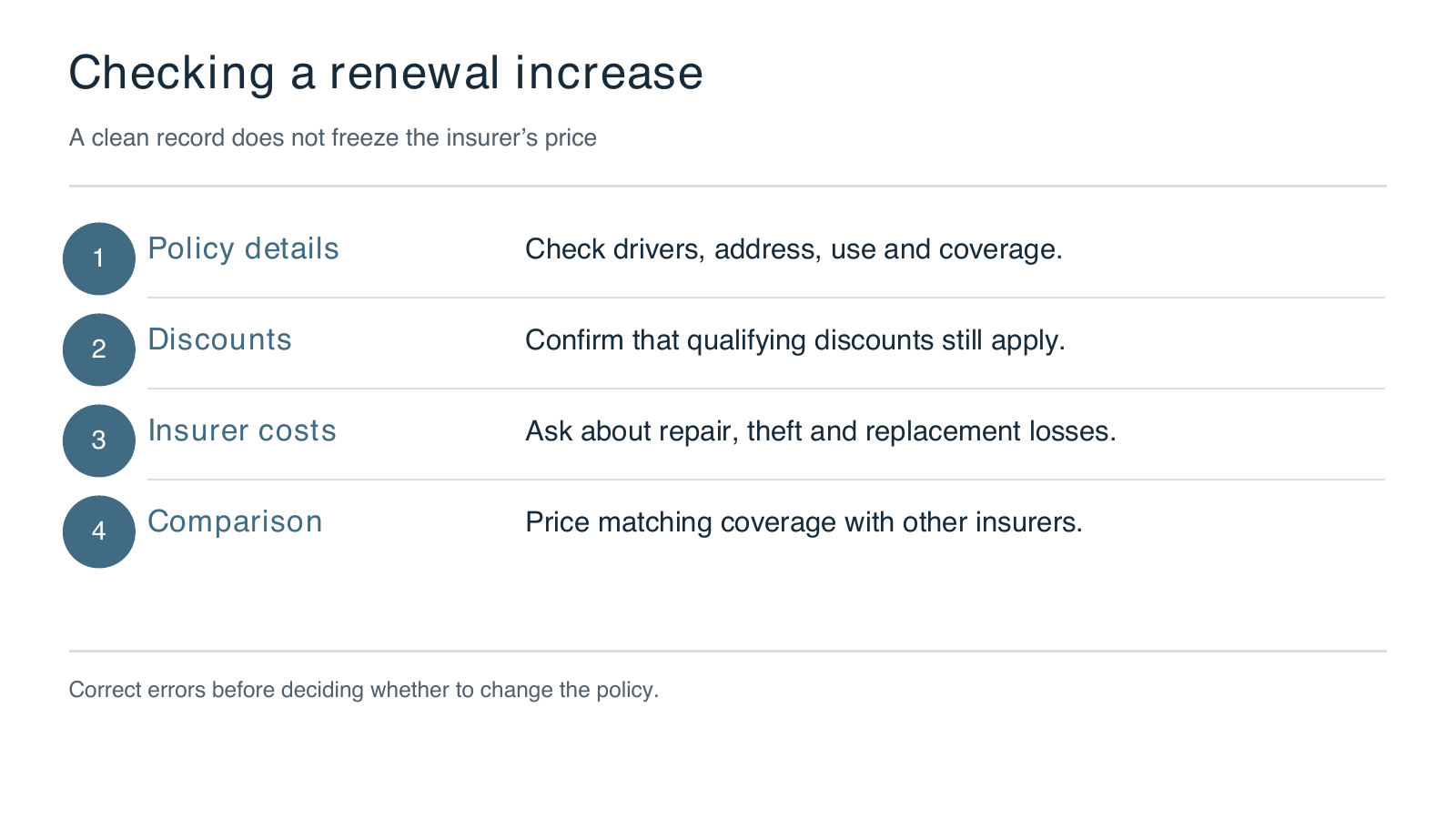
The increase may also be closer to home. A discount could have ended, or the policy may describe a car or driving routine that has changed since last year.
Compare the Renewal with Last Year
Start with the price for a full year. A monthly withdrawal may include a payment adjustment, so one month’s bill doesn’t always show the change in the yearly premium. The two amounts also need to cover the same length of time.
The certificate of insurance shows the coverage the driver bought. Comparing its liability limits, accident benefits and vehicle-damage coverage with the renewal can reveal a change. A different deductible or added rental-car protection can affect the price. The amounts for each coverage help explain an increase that the total bill alone doesn’t.
Next, check the names of the drivers and the details of the car. A household driver may have moved from a learner’s licence to another licence class. Someone may have replaced the car during the year. Last year’s price may have been based on details that no longer apply.
Discounts can change too. The driver can ask which discounts applied last year and which ones still apply. Some discounts last only while the driver meets certain conditions. A driving-app discount may change with the recorded driving score. Some programs can add a surcharge, so signing up doesn’t guarantee a cheaper renewal.
For a missing discount, the insurer should explain what changed and whether proof of eligibility would restore it. Asking which coverage costs more this year also gives the representative a specific part of the bill to check.
If all those details are correct, the insurer may have changed its pricing. The driver can ask how much of the increase comes from that change. Having no accident doesn’t rule out the other reasons for a higher premium, and the documents help narrow the question.
Why the Insurer’s Costs Can Change
Insurers use premiums from groups of drivers to pay claims. They estimate how much those claims will cost in the coming year. Even a driver who makes no claim belongs to a group whose losses can change. A good record helps with pricing, but repair bills and other losses can still raise the price.
Repair Work and Rental Time
A shop repairing a bumper may need to replace sensors and reset safety systems. That adds parts and specialist labour to the bill.
The work can cost more than repairing a bumper without that equipment.
The insurer may also pay for a rental car during the repair. Waiting for parts or completing a complex repair can extend that rental.
Theft and Replacement Losses
Those repair and rental costs help explain why an accident-free year may still bring an increase. The provider should explain their effect on the particular renewal.
Comparing Toronto auto insurance options means checking what the policies cover as well as what they cost.
A cheaper policy with a larger deductible leaves the driver paying more toward a covered repair.
A drop in theft doesn’t always bring a lower premium. Insurers may still pay large amounts to repair or replace damaged cars, even when fewer vehicles are stolen.
Changes That May Be Correctable
The kilometres on the policy should reflect all the car’s use. Working from home on some days may mean less driving, while a new job may mean a longer commute. Trips outside work count too.
The address and driver list need to be right. If either is wrong, the driver should ask the provider to correct it. Using a relative’s address to get a lower price can put coverage at risk.
An unreported discount may help explain why the price seems high. Winter tires, an eligible employer or professional group, or retirement may affect the price. The provider can say which conditions apply and give a quote with the discount included.
For winter tires, the provider may need to know the tire type and when they are fitted. The driver can ask what proof to send and when any price change would start. Qualifying for a discount and having it recorded on the policy are separate checks.
Correcting these details leaves the coverage in place while the insurer prices the driver’s actual situation.
When the Vehicle Ages but Repair Costs Rise
An older car may sell for less, but a shop still needs to buy parts and pay workers to repair it. A sensor doesn’t become easier to replace as the car ages. Rental-car expenses can also add to what the insurer pays while the car is in the shop.
Higher parts and labour costs can raise the bill for each claim without any increase in the number of accidents. Drivers who haven’t made a claim can still see the effect in their premiums. Collision and comprehensive prices therefore may not fall as fast as the car’s resale value.
Removing either coverage leaves the driver paying for losses it would otherwise cover. That choice needs its own review. It doesn’t tell the driver whether the renewal bill contains an error.
Questioning a Renewal Increase
A broader approved rate change may explain part of the increase. An average announced for an insurer doesn’t mean every customer gets that same increase, so the explanation should still account for this policy’s details and discounts.
If the driver seeks other quotes, the driver details, liability limits, deductibles and optional benefits should match. After Ontario’s July 2026 accident-benefit changes, existing policies keep their previous benefits at renewal unless the customer agrees in writing to changes.
A replacement quote may depend on checks of driving history or other application details. Before switching, the driver should confirm the final price and start date, including any cost for cancelling the old policy in the comparison. Replacement coverage must be confirmed before the old policy ends.
If the explanation doesn’t match the documents, the company’s complaint officer can review it. An unresolved concern about insurance rules can then go to the Financial Services Regulatory Authority of Ontario.