

Every return has a story behind it. The challenge for investors is seeing the businesses, decisions, and risks that shape that story.
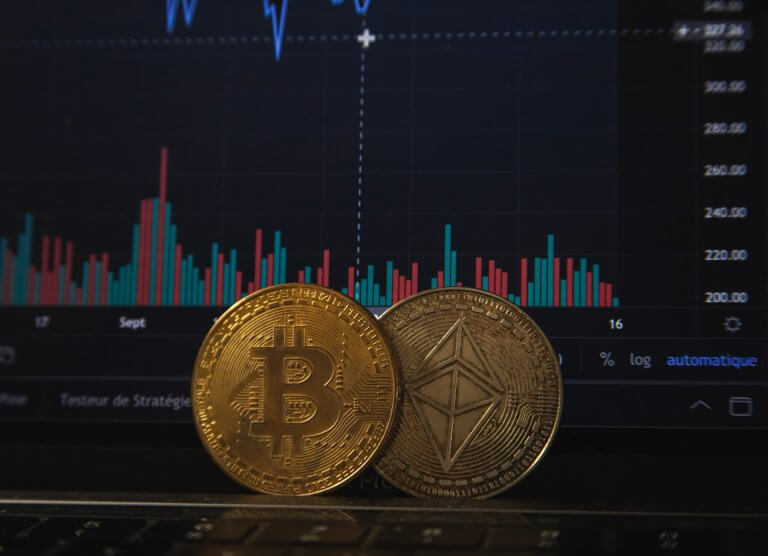
Many investors have grown accustomed to financial products in which the connection between their money and the underlying activity feels distant. A stock price moves, a token rises, or an account balance changes, but the business behind the number can remain unclear.
Halal Investment Faces an Old Challenge
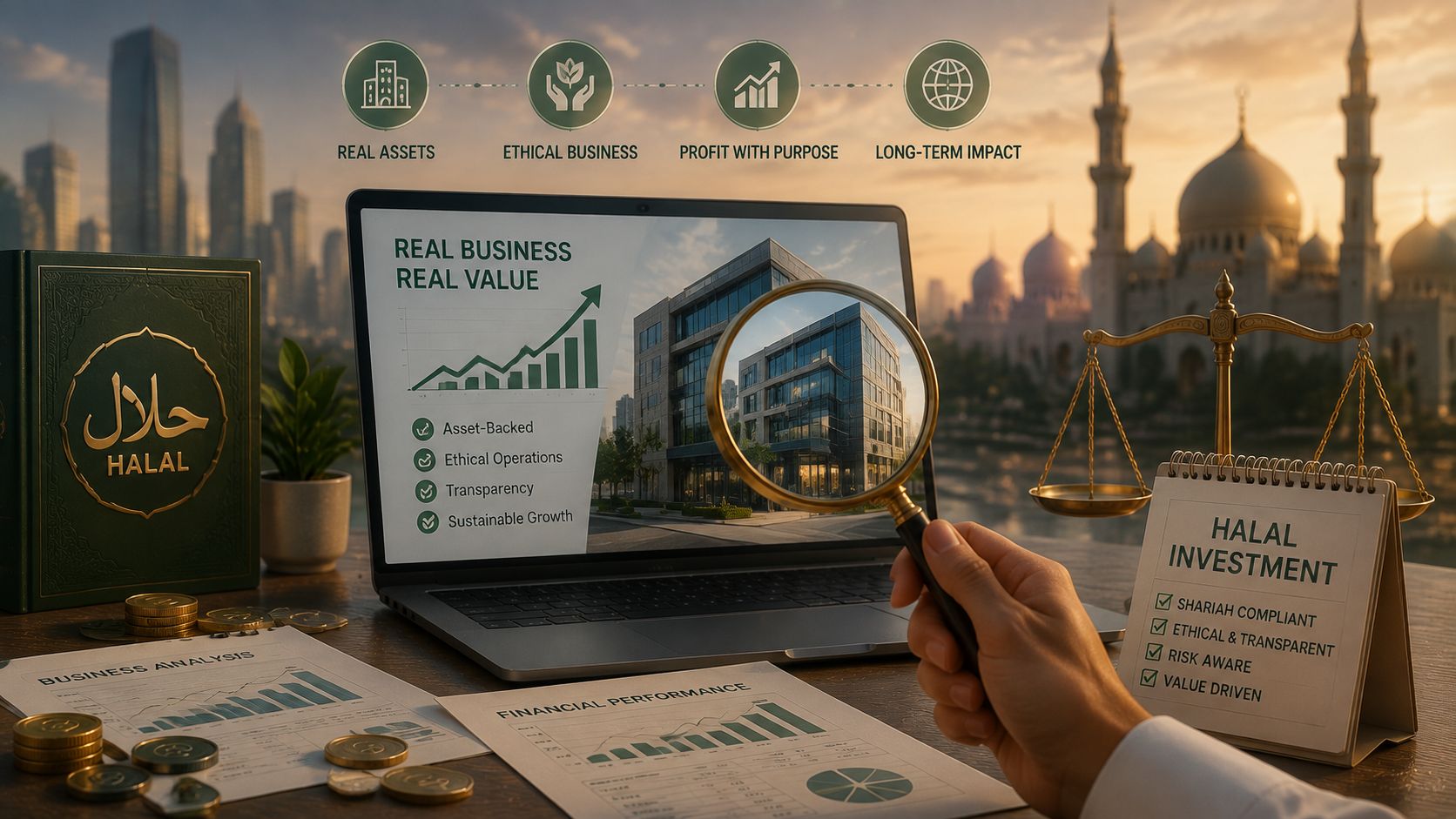
If you are focusing on halal investment, your focus is on where the money goes, which activities generate profit, and whether the investment structure adheres to agreed-upon ethical principles.
At the same time, businesses face a familiar problem. A company may have customers, orders, and a clear opportunity, yet still struggle to access the capital needed to complete a transaction. Traditional financing does not always fit every situation, especially for smaller businesses or trade-based companies that need funding for a specific business cycle. The result is a gap. Investors want meaningful opportunities, while businesses need practical access to capital.
The Money Story Behind the Investment Matters
Imagine a distributor that receives a large order from a retailer. The demand exists, but the distributor needs funds to purchase inventory before receiving payment from the customer. The business is not seeking funding to support an uncertain idea. It needs working capital to complete a real commercial transaction.
A different example might involve a company importing goods for a confirmed buyer. The funding supports the purchase, delivery, and sale process. Profit comes from the business activity itself, not simply from money changing hands.
Crowdfunding has made it easier for more people to participate in opportunities that were once available mainly through private networks. Blockchain-based records add another layer by making certain transactions easier to track and review. They do not remove business risk, but they can provide clearer records of financial movement.
Crowdfunding Changes Access, But Trust Still Decides Everything
Opening investment opportunities to more people creates a new challenge. Access is only valuable when investors can understand what they are joining.
A project description, expected return, and funding target are not enough on their own. Investors need information about the business model, the use of funds, the expected timeline, and the risks involved.
Islamic finance has long placed attention on the relationship between capital and real economic activity. Profit comes from participation in business activity, with returns connected to outcomes rather than predetermined interest payments. That approach changes how investors look at opportunities. The return is not the starting point. The business is.
The Number on the Screen Is Not Where the Investment Begins
Profit sharing, ownership structures, and commercial participation all require investors to think differently. A projected return is an estimate based on assumptions about the business, market conditions, and execution.
A company may perform well and generate profit. It may also face delays, changing demand, supplier problems, or customer payment issues.
A 12% expected return does not mean an investor has bought a guaranteed 12%. The percentage represents a possibility based on a real-world process that still carries uncertainty. Strong investment decisions usually start with understanding the activity behind the return.
Digital Platforms and the Search for Transparent Investments
The challenge for many investors is not only finding opportunities. It is finding enough information to evaluate them.
Platforms such as HalalFi are exploring this model by connecting investors with Sharia-reviewed commercial projects. The platform focuses on project funding information, business and Sharia review processes, USDT participation, and blockchain transaction records, which provide visibility into investment activity.
Investors should be able to see more of the journey between their capital and the business generating the return. Project details, terms, and risks become part of the decision-making process rather than something hidden after investment.
Final Though
Every investment model has risks, and business-based crowdfunding is no exception. A funded company may not complete its commercial cycle as expected. Customers may delay payments. Market conditions may change. Investors may also face liquidity limitations if they cannot quickly exit a position.
Digital assets introduce additional considerations. USDT participation and blockchain-based transactions can make certain processes easier to record. However, investors still need to understand digital asset risks, platform practices, and the specific terms of each opportunity.
The presence of technology does not replace financial judgment. It simply changes how information can be presented and accessed.
The strongest investment decisions rarely begin with the highest number on a page. They begin with a clearer view of what creates that number, who benefits from it, and what risks exist along the way.